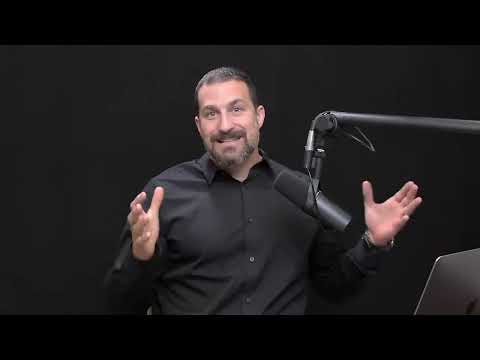
Andrew Huberman
7 HN recommenders · recommended in 12 months, 2021–2024
1:22:05 · 4.3M views · Jan 11, 2021
Andrew Huberman's podcast episode on what makes us sleepy, helps us sleep soundly and keeps us alert. It lays out the science and a set of behavioral tools such as light timing.
HN users repeatedly credit it with fixing their sleep, especially its advice on morning light and dimming lights in the evening.
14 comments from Hacker News
I essentially solved all of my sleep problems by doing the following: Getting 15-30 minutes of bright light exposure first thing in the morning. Ideally this would be sunlight, but I don't have that option this time of year based on how early I wake up (I'm in the PNW and wake up at 6am), so I use a sun lamp I bought on Amazon. Likewise, minimizing blue / bright light after the sun goes down. If I need to use my computer, I have flux installed and set to the lowest brightness setting. I do something similar for my phone as well. Supplementing glycine, magnesium glycinate (which also contains glycine), l-theanine, and ashwaghanda in the evening before bed. Glycine has had the most impact on my sleep. It's as if I had been exiled from dream-land before, but now I've been allowed back! My sleep is so much deeper. Note: I bought the BulkSupplements powdered version on Amazon and take 3-5x the recommended dose in my evening smoothie. I've found megadosing magnesium in this way also helps. The recommended doses seem to be way too low, especially if you happen to be deficient. As someone who spends a significant portion of the day in front of a screen, I can't emphasize enough how important managing light exposure throughout the day is. Check out the Huberman Lab podcast if you haven't already. This episode in particular is what started me down the path to correcting my sleep: this video After watching that episode, I used my sun lamp to dial in my circadian rhythm over the course of a
I was the same as you, and I was recently able to correct my sleep patterns. Now, I naturally wake up without using an alarm. What helped me was watching Huberman Lab's episode on sleep: this video I highly recommend it. The key is light. Light controls your circadian rythm (biological clock), so make sure you get enough sunlight in the morning, and make sure to avoid light exposure after 10pm. For more: [LINK] [LINK]
I've gone through two burnouts in my career. The first time around, I tried CBT (Cognitive Behavior Therapy), with limited results. Recently, I followed the Huberman protocol for sleep [1] and daily tools [2], with profound results. Recovery time was respectively 12 months (CBT) and 3 months (Huberman). YMMV [1] this video [2] [LINK]
I have found Huberman podcast incredibly helpful - in detail explanation(too much sometimes) of how brain works. There are 4 episodes(1.5h each) dedicated just to sleep. The whole podcast is great. this video
A. Meet your basic biological needs. Your brain is a part of your body. A person with an iron deficiency can feel compelled to chew ice[1]. Ice does not cures anemia, brains are weird parts of the body and do weird things when the body is not getting what it needs. So, get better sleep, food, and exercise. Prof Andrew Huberman has some good tips[2]. B. Decide what few things you really value and allocate your time to those on purpose. If you find yourself repeatedly drawn to the news, maybe you are genuinely give a fuck about civic engagement. Your personality has a need for it. Trying to meet that need by scrolling twitter is like eating 3 bags of tortilla chips for dinner -- quick-access, but not healthy. If you be better off deciding that you value Mexican food, opening your calendar and honestly deciding to spend the time to learn to cook Mexican food. Look for the virtue underneath your vice -- What information are you most drawn to and what healthy activities does it point towards? Pick 3 and pursue those deeply. Why 3? You can only honestly give a fuck about a few things[3], so that requires deciding to not do other reasonable fun activities. If shallow engagement with your interests has been your primary mode of procrastination, then honest and deep engagement might deceptively feel like a waste of time. That makes this hard. Why arbitrarily avoid those other things? You are choosing to be the arbiter of your time. Take pride in grappling with the fear of procrastinat