Google TechTalks
3 HN recommenders · recommended in 4 months, 2011–2015
55:03 · 353K views · Dec 2, 2009
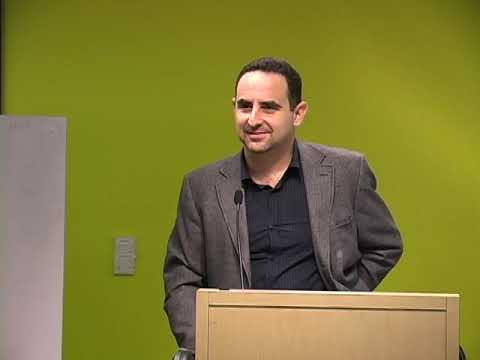
David Rock gives a Google Tech Talk based on his book Your Brain at Work, using neuroscience to explain why focus and productivity are hard at the office. He gives strategies for managing mental energy and distraction.
HN commenters point to it as a general overview of the cognitive science of insight and focus that is useful for developers and knowledge workers.
5 comments from Hacker News
1. It doesn't say Einstein was bad at math, it says his math skills aren't the reason he is considered a genius. 2. The Google TechTalk it references explains "insights from weak associations" in more detail: this video 3. If you don't have perspective, how do you know the thing you're focused on is of any importance? You can see practical examples of this everywhere: "One of my favourite tuppences for engineers struggling to find a bug is 'breadth first not depth first'. This can be annoying for someone working through complex technical details, because it implies that the solution is actually much simpler if they only looked...I coined this saying because in software matters I find that if we force ourselves to examine the top level considerations first, before tunneling down into the detail of a particular line of inquiry, we can save enormous time" ( [LINK] ).
People who are into this kind of thing will probably like "Your brain at work" by David Rock. It covers this topic and a few more - it's pretty interesting stuff for developers and knowledge workers. There's also a tech talk here: this video Also, get Pragmatic Thinking and Learning by Andy Hunt. Also covers these topics and helps people understand learning, creativity and how to exploit the way you work and think to, well, learn better.
For more specifics into the cognitive science behind why this is - another good book, which has lots of wonderful references to studies on this topic (amongst other things), is "Your Brain at Work" by David Rock. Or, for the general overview you can watch the Google Talk at this video
UPDATE: I emailed Sebastian Seung ( [LINK] ) asking about this. This is what I said: "BTW I liked your TED talk. My friends and I were discussing it the other day, and I made the analogy of comparing the connectome in your brain to hardware and the thoughts in your mind to software. Is that a fair analogy? David Rock wrote a book called 'Your Brain at Work' where he says that insights come from detecting weak associations (he gave a Google Tech Talk on this too -- this video ). If the brain software/hardware analogy is right, is there a similar relationship between weak associations of thoughts and neurons that are "distantly" connected? In other words, are associations weak because they are indirect paths from one node – one neural connection -- to another, and would a more direct path optimize you mental ability?" This is what Sebastian said: "The hardware-software analogy is wrong 1) the brain is not a general purpose programmable computer. different areas are specialized to different functions 2) the connectome changes over time, unlike hardware you're right that direct vs indirect paths do matter, unlike in communication networks. but the weakness of an association might have to do with the strength of synapses, not just the length of the path. i'm addressing these questions in my book which will appear in feb 2012 if all goes well." So maybe a better analogy for the brain would be a network of specialized computers, like a private cloud connected to the Internet because th
It seems to be a common sentiment that burnout is largely driven by how many hours a day you work. Why is that? From what I've been taught burnout is the result of continuous stress. Where stress is more or less defined as a continuous sensation of being threatened. I've seen people with perfectly normal workours become burnt out. I've even seen people working ten hours a week getting burnt out. The common factor thus not being the objectively measurable amount of work. My own formula for diagnosing a work environment is more like Risk of Burnout = perception of expectations / perceptions of means to deliver But a more useful model might be the SCARF-model presented in this tech talk this video It seems to me that hours worked relates to issue of burnout more like lack of sleep to the risk of catching a cold. Potentially a big factor, but only incidentally.