Stats for nerds
2recommend
3mentions
2people
2020–2021years
100% recommend
Mentions per year
What Hacker News says
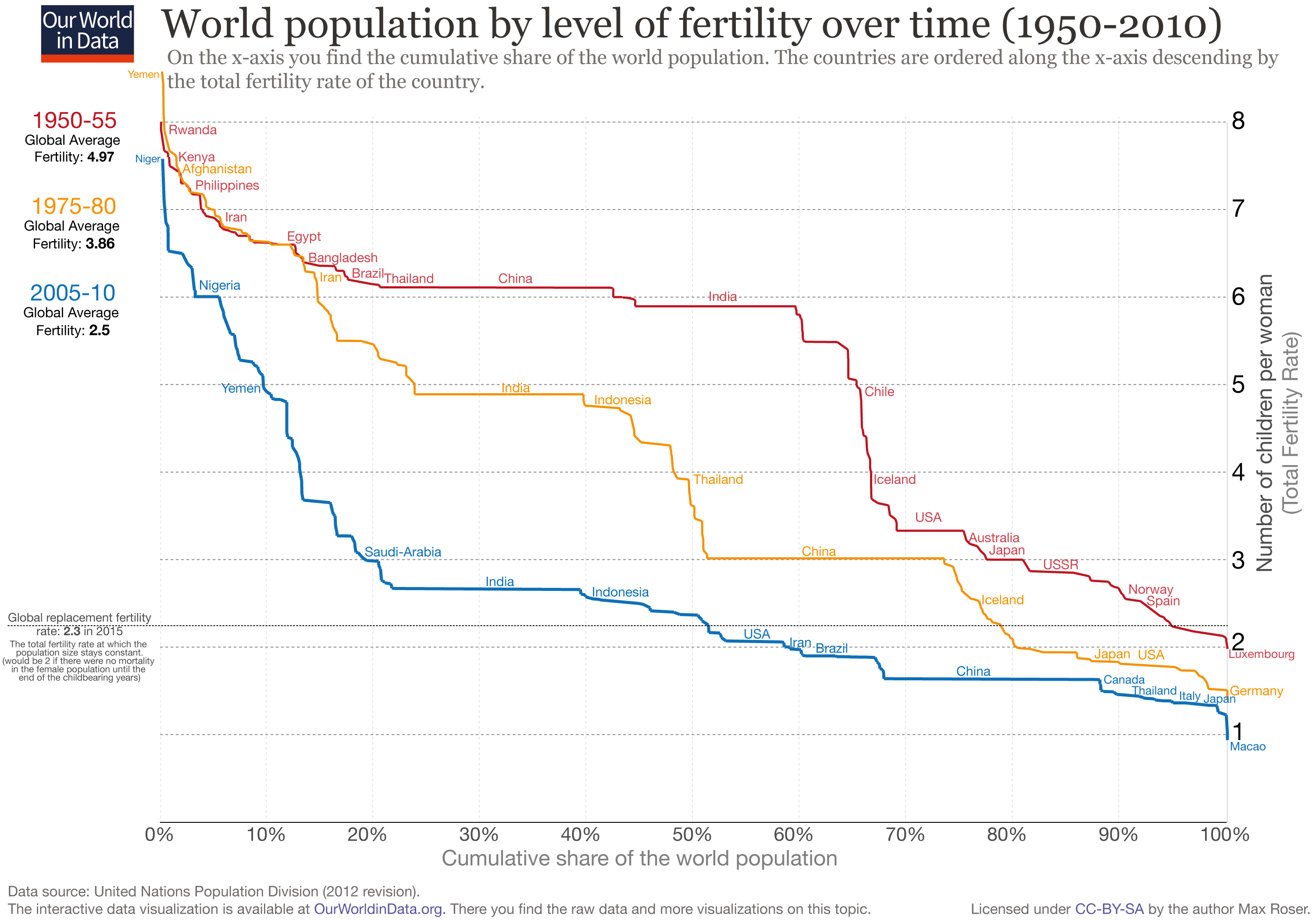
- It's a good counterpoint. Every developed country will end up as Japan eventually [1], and timing won't help you; where else would you put your investment assets to get exposure to similar risk adjusted returns (developing country returns expose you to greater risk)? Waiting for values to decline will be ineffective, as central banks will acquire assets to prop them up (Bank of Japan is the largest owner of the Nikkei [2]). Returns will decline, and the cost to obtain those declining returns will rapidly increase as trillions of fiat worth of capital chases it.
Over a long enough period, stonks only go up because that is what we've collectively agreed on, and government will backstop at all costs [2] while population and productivity extracted from that population declines over time [3].
I recommend "Shrinking-population Economics: Lessons From Japan" [3] on this topic.
[1] https://ourworldindata.org/uploads/2014/02/World-population-...
[2] https://www.bloomberg.com/news/articles/2020-12-06/boj-becom...
- Do you really think a rich country of 100M hasn't done its homework on this? I'm personally partial to Matsutani's Shrinking-Population Economics:
https://www.amazon.com/Shrinking-population-Economics-Lesson...
From a review: " The parlous state of Japan's pension system is well known, but Matsutani reviews the projections: by 2030, contributions will cover only 44% of expenditure, leaving a projected yearly deficit of ¥57 trillion by 2030 and a cumulative debt load of ¥1,240 trillion, roughly equal to the sum of all household wealth in Japan today. Getting back to balance would entail either more than doubling contributions from 15% to 34%, or cutting benefits by 56%."
- It's tremendous news. The carrying capacity of the Earth is closed to 1 billion people (we're at ~7 billion, and on track to hit ~10 billion by the end of the century due to population momentum). Target total fertility rate should be as close to 1 as possible.
This is a subject near and dear to my heart as a systems observation wonk, and have done a tremendous amount of research on the subject.
I recommend these two books to those interested:
Shrinking-population Economics: Lessons From Japan by Akihiko Matsutani
Countdown: Our Last, Best Hope for a Future on Earth? by Alan Weisman
Related

The Great Demographic Reversal
3 recommend · 14

The global minotaur
5 recommend · 12

Superfreakonomics
7 recommend · 25

Freakonomics
27 recommend · 71

Basic economics
88 recommend · 156

Intermediate microeconomics
6 recommend · 11

Economics
2 recommend · 6