Skip to content
HomeVideos
AllLongsCategoriesPlaylists
BooksBlogsPodcasts
HistoryListsWatch laterLiked videosFollowing

The videos, books, blogs and podcasts Hacker News keeps recommending, all in one place.

VideosBooksBlogsPodcastsAboutPrivacySettings

Data from Hacker News, HackerTube, HackerBooks, HackerBlogs and Open Library. Credits · Not affiliated with Y Combinator.

HomeVideosBooksBlogsPodcasts
Ctrl K

    What keeps a train on the track?

    BoreMeScience

    1 HN recommender · recommended in 3 months, 2019–2022

    YouTube

    2:27 · 191K views · Sep 22, 2009

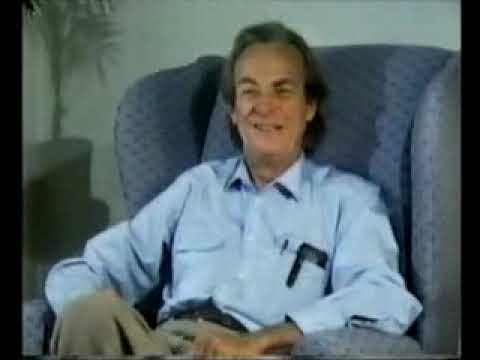
    A short clip of Richard Feynman explaining how a train stays on its tracks, through the conical shape of wheels and how it handles curves without differentials.

    HN links it as a great, surprising explanation whenever rail wheels, gauge or curves come up.

    Physics, Space & ChemistryFundamental physicsTransit, cities & urban planningMechanical & precision engineering
    1. 2:27
      Feynman: How the train stays on the track FUN TO IMAGINE 7Christopher Sykes820K views • 18 years ago
    2. 11:22
      Most People Don't Know How Bikes WorkVeritasium25M views • 4 years ago
    3. 3:57
      How Do Bikes Stay Up?minutephysics1.7M views • 11 years ago
    4. 2:39
      TMS Bicycle, stable without gyros or trail (TMS=two-mass-skate)Arend Schwab44K views • 15 years ago
    5. 9:31
      Around The Corner - How Differential Steering Works (1937)US Auto Industry22M views • 17 years ago
    6. 7:35
      Feynman: Magnets (and Why?) FUN TO IMAGINE 4/ higher quality version!Christopher Sykes360K views • 8 years ago
    7. 7:33
      Richard Feynman. Why.firewalker5.5M views • 14 years ago
    8. 1:06:50
      The complete FUN TO IMAGINE with Richard FeynmanChristopher Sykes5.9M views • 8 years ago
    9. 15:53
      Why Railroads Don't Need Expansion JointsPractical Engineering5.3M views • 2 years ago
    10. 56:04
      Richard Feynman - The.Character of Physical Law - Part 1 The Law of Gravitation (full version)Tinkerin' Thinkers1.4M views • 15 years ago
    11. 1:06:50
      HD Feynman: FUN TO IMAGINE complete (with optional Chinese subtitles)Christopher Sykes713K views • 6 years ago
    12. 7:33
      Richard Feynman Magnetsnebulajr1000K views • 17 years ago
    13. 9:47
      Feynman: Mathematicians versus PhysicistsTehPhysicalist882K views • 14 years ago
    14. 4:19
      How Special Relativity Makes Magnets WorkVeritasium4M views • 13 years ago
    15. 7:33
      Feynman: Magnets FUN TO IMAGINE 4 But see NEW UPDATED file at https://tinyurl.com/ycphc432Christopher Sykes1.6M views • 17 years ago
    16. 3:34
      Complete Solution To The Twins Paradoxminutephysics2.3M views • 10 years ago
    17. 8:25
      Calculating a Car Crash - NumberphileNumberphile446K views • 8 years ago
    18. 7:07
      Feynman: What things really are like FUN TO IMAGINE 1Christopher Sykes747K views • 17 years ago
    19. 6:03
      Do Your Buses Get Stuck in Traffic? (The Downs-Thomson Paradox)Not Just Bikes693K views • 6 years ago
    20. 28:39
      The Hyperloop: BUSTED!Thunderf00t2M views • 10 years ago

    3 comments from Hacker News

    1. @frosted-flakesJun 2020· in “New slats make the Golden Gate Bridge sound like a David Lynch movie”

      > unlike the cylindrical profile which again just steers with the flange basically rubbing against the edge of the railhead. That's crazy. That means that the wheels are actually slipping when going around a corner, because the wheels are all the same diameter. Unlike conical wheels, which are essentially self-steering. Here's a great explanation by Richard Feynman: this video How could the BART trains possibly have cylindrical wheels? Conical wheels have been used on trains for ages, so that's seems weird. But doing some research, it seems that, yes, they were cylindrical: > Queensland Railways, for its first hundred years, used cylindrical wheels and vertical rails. With non-inclined rails and cylindrical wheels, the wheel squeal from trains taking curves on that railway was slight. After adopting coned wheels and inclined rails from the mid 1980s, the wheel squeal from trains curving at the same location and at the same speed decreased immensely. Some modern systems, such as Bay Area Rapid Transit (BART) in San Francisco, use cylindrical wheels and flat-topped rails; BART is now switching to conical tread to reduce the noise caused by flange/rail contact and loss of adhesion of one of the wheels on curves. -- [LINK]

      RecommendsView on HN
    2. @JackFrJun 2019· in “The Space Shuttle and the Horse's Rear End (2000)”

      Snopes rates it as partly true, and the author is a pedantic killjoy. It is broadly true that for 2000 years European vehicles matched their roads and adapting existing vehicles to new technology led to using axles that were the same size. Do other gauges exist? Of course. Are the true elements of this worth repeating? Sure. As an unrelated aside here’s Richard Feynman explaining why train axles don’t need differentials. this video

      CitesView on HN
    3. @texaslonghorn5Jul 2022· in “Why BART uses a nonstandard broad gauge”

      this video (video of Feynman explaining how trains stay on the track) Is this it? I found it in my YouTube history. Or this one, which superimposes free body diagram (of forces) on the wheels to show how it is self stabilizing? [LINK]

      CitesView on HN